Activities
Today

November 2026
Next update (works only on profile page)


- It feels like the old HP games, e.g. Philosopher's Stone
- The game includes all the major spells known from the books
- A lot of freedom to explore and collect junk, if you fancy
- Good voice acting
- Combat is well executed
- Manual save system
- Story mode for those who don't want to fight or are bad at combat
The bad 👎
- Dialogue animations are very stiff
- The story ends in a predictable way
- Keeping your chosen look is annoying: the "I want my cape to look like X" transmog resets every time you change to better gear
- The Hogwarts map is hard to read, and the castle feels too big. But I'm sure bigger fans than me will love it
- Alohomora has a very annoying minigame
- It crashed every 1-2h, and none of the manual fixes I tried helped
- The main character is very bland
- Except for 3 character side-quests, all side-quests are fetch quests
- There are no repercussions for using unforgivable spells
Conclusion:
What the game does well is Hogwarts' atmosphere. The castle, Hogsmeade, the graphics and the overall vibe are magical. The puzzles are also a nice throwback to old HP games.
What it does poorly is, well, pretty much everything else. It is not an RPG, as there are no choices or consequences of our actions. The world is big and open, but also empty, apart from a multitude of collectible fetch quests and repetitive mini-dungeons. The story is predictable and on rails. Combat is well executed, but why is a 15-year-old mowing through hordes of goblins and dark wizards twice their age? Why do professors say we need to work hard to catch up on 4 years of education (we start in year 5, as we are so special), and then accept that we spend half of our time running around clearing goblin bandit camps? There is not enough story, especially since from around the halfway point it progresses mainly through completing trials, with few cutscenes in between.
There are also things missing from the game. The morality system was cut, reportedly after the death of one of the lead developers. There is no punishment for using Avada Kedavra on enemies and people at school (though people at school are at least untouchable...). No Quidditch. No duels. No social interactions. No relationships. It is sad that those never got implemented, even though some of them were being worked on during production.
Details
☐ Bare-bone ☑ Average ☐ Good |
We are gifted in using ancient magic and can see its traces. We are so special that we were missed when the Hogwarts invitations went out, so now we join in the 5th year, just before important exams, and need to fast-track 4 years of learning into one. All while solving the mystery around our powers, stopping a goblin rebellion and surviving relentless attacks from dark wizards. Easy peasy. The main story is better at the beginning. Later on we focus on completing 4 trials of old, powerful wizards to uncover biography of another ancient magic wielder. The problem is that the story is predictable after the second trial, so we rush through the last two trials already knowing the "big revelation". The game ends with an "epic battle" and a predictable "for emotional value" death. It is all very rail-roaded. Side stories are interesting and expand the universe. There are 3 side-stories of other 5th-year students: one from Gryffindor, one from Slytherin and one from Hufflepuff. The Ravenclaw story is missing, it must have been cut due to budget / time limits. The game has remnants of the morality system that was cut from the final version. We are warned against using dark magic, and we can refuse to learn specific dark spells. And then we can throw them left and right: around school, in villages and in fights. It feels a bit fragmented and immersion-breaking. |
☐ Boring ☑ Average ☐ Good |
It is an impressive game, and there are quite a lot of things to do, even if most of them are filler. The game is full of HP atmosphere. We can grab a Butterbeer in Hogsmeade, or a cupcake in the castle kitchen. We can fly around the open world to enjoy the views, or race other students. Explore the castle and the wilderness. Solve simple environmental puzzles, or collect a multitude of collectibles (which also give us HP universe backstory). There is a simple day/night cycle. So it is a great title to immerse yourself in the HP atmosphere. Sadly, apart from that, the gameplay loop is very repetitive. Arrive at the quest giver. Travel to the location. Kill enemies and/or retrieve an object. Return for the reward. Guardian trials feel like puzzle dungeons from old HP games, though they are quite focused on combat as well. Interactions with professors are very limited and superficial. Each one teaches us 1 spell from the main storyline, plus an optional additional spell if we do some fetch quests for them. The game benefits a lot from the fast travel system, otherwise arriving at the necessary locations would be very repetitive. |
☐ Basics (walk, jump etc.) ☐ Magic / powers ☑ Advanced combat |
We can run, jump, fly on a broom anywhere outdoors, fly on a hippogriff and ride tank-sized monstrosities. We can cast an enormous number of spells. We can use levitation on cats and cows to watch them helplessly wiggle their legs mid-air. We can cast a fireball to light lanterns or cast camouflage to stealthily take down enemies in a bandit camp one by one. We can grow plants like Mandrakes and angry cabbages and use them in fight. We can brew potions (though I relied on health potions found on enemies and never needed to brew anything). There is a simple experience / abilities system where we can improve spells (Glacius can freeze nearby enemies, Stupefy curses enemies etc.), potions / combat plants and passive buffs (like the number of spell slots available or better stealth abilities). We can respec specific skills, which is useful as reaching higher levels later on gets very grindy. |
☐ Clunky and stiff ☐ Adequate ☑ Fluid and enjoyable |
Flying on a broom takes a bit of getting used to, but apart from that there are no issues. Platforming elements are well executed and controls are responsive. There is no "but I thought I pressed the button on time to avoid this attack" feeling. Some keys on PC are weirdly assigned, but it's possible to remap them all. Why is Wingardium Leviosa controlled with V/F/Q/E instead of using the mouse wheel? And why, after pressing Shift to turn on "turbo" on the broom, I still need to hold "forward" in order to steer the broom with the mouse? Little things like that. |
☐ Basic ☑ Detailed ☐ Over complicated |
The menu feels a bit clunky. Direct shortcuts open the map, inventory, abilities etc. But pressing Esc once does not take us back to the game, it opens the master menu, and another Esc is needed to resume. Loading of master menu is slow, so the whole experience is a slog. Changing gear is annoying, as pretty much all better pieces of clothing look ridiculous and make us look like a clown. Transmog is not explained, I stumbled on it by chance. And then, each time we change gear, the transmog is reset, so we get the "ridiculous look" once again. We need to go to the gear slot, select "yes pls override this ugly clothes", open the menu with a multitude of options, select something, and go back to the gear menu. Rinse and repeat for each single piece of gear: glasses, outfit, gloves, cape, hat, scarf. I sometimes found myself not using better gear, as I could not be bothered with all this hassle. The alternative was to look like a clown in cutscenes. We collect a lot of facts along the way, but there is no "read all" option in the collectibles menu. We can re-decorate the Room of Requirement, but it is a bit clunky as it requires placing rotatable objects in 3D space with object collision. It made me think of building camps in Fallout 76. The areas where we can keep pets have a limit on how many objects we can place before the game runs out of memory / resources, same as in F76 lol. |
☐ Boring and generic ☐ Average ☑ Good ☐ Great |
I
I do like the combat in this game. Enemies are responsive and have a good repertoire of spells and attacks, though they can get buggy: stuck in an object, or repeat the same spell over and over again. Enemies can raise shields, which need to be dispelled with a specific type of magic: red barriers with attack spells, purple with manipulation spells (Accio, Depulso etc.), yellow with state spells (Glacius, Arresto Momentum, Leviosa). It means we need a set of all available spells, instead of using the same spell across all fights. We can dodge attacks or parry them. If we time the parry right, we respond with a counter-attack that can leave the enemy confused for a few seconds. We can also use ancient magic, which boils down to filling the ancient magic meter by killing enemies and doing specific actions (like dodging an unparryable attack in time). Ancient magic attacks deal tons of damage, and usually take the form of calling down thunder from the skies. I found combat manageable on hard difficulty, but if you struggle, it's possible to play on story-first difficulty, where combat is way more forgiving. It is also possible to sneak around and use Petrificus Totalus on enemies. It works on all humans and gnomes, but is not viable on animals and trolls. Althought it is not a stealth game. No elevation gain to find a good position, enemy patrol routes are extremely basic, and enemies have clear auto-aim on us and spot us easily. Later in the game we learn Imperio as a mind-control spell. It is fun to cast it on an enemy and have them fight each other. Rinse and repeat. It is quite slow though, and gets tedious fast. Enemies also go back to their patrol routes like nothing happened when effect wears off, even when they say things like "you will not control my mind!". It is a bit immersion-breaking. They should go and look for the player, not act like nothing happened. |
☑ None ☐ Skins ☐ "Time-savers" ☐ Direct purchase ☐ Custom currency (gems etc.) |
☐ None ☐ Story progression ☐ Few collectibles / easy to get ☑ Grindy collectibles / hard to get ☐ Require multiple playthroughs |
☐ No saves ☐ No saves, progress carries over ☐ One checkpoint, too rare ☐ One checkpoint, frequent ☑ Manual saves |
☐ Can run on potato ☐ Medium requirements ☑ High requirements ☐ Too low for what is visible on screen ☐ Optimization disaster |
☐ May look good 10 years ago, but not now ☐ Blurry textures / geometry problems ☐ Average ☑ Good ☐ Beautiful |
☐ Nothing to remember ☑ Good voice acting ☐ Good weapons & effects ☐ Good OST ☐ Music flows well with the action |
☐ Resolution, volume only ☐ Basic graphic settings ☑ Advanced graphic settings ☐ Adjustable HUD ☑ Accessibility options |
☐ No map ☑ Basic ☐ Detailed ☐ Minimap ☑ Fast travel |
Side note
Bouldering/climbing is harder than it looks. All those games where the main character is kicked out from their comfy life, into a jungle where they climb vertical walls like goats - ha, not happening. Amount of strength one need to have in their fingers to hold to small holds is crazy. 🧗♀️
So far I like it more than archery. Another game-activity tried in real life ✅
Well, I also went on shooting range during the summer. So I guess that gives me 3 activities. I am not escaping police chase with a stolen car for the next one 🤣
Yesterday

November Assassination #5


Kind of went into the experience expecting a lot, and got really disappointed by it. I'm sure if you grew up with your Xbox playing Halo online after school, you'll only have great memories of it. But if you're like me, and played it for the first time in 2026 shortly after beating Modern Warfare 2 and 3, and Doom 2016, it's very hard to understand the praise this game gets. Again, nostalgia and perspective, but it didn't pass the muster for me, joining Bioshock and Journey as some of the greatest disappointments I've experienced recently.
The main things that bothered me were the sameness of the levels (the second half of the campaign almost feels like the first half spun backwards), how long and samey each individual level is, the sponginess of the enemies particularly when paired with how bad the guns feel to shoot, and how quickly you run out of ammo and how few guns you carry. I know the idea is to have a tactical shooter with a slightly longer time to kill, but it turns out I never felt I had the appropriate gun for the situation.
I ended up loving the pistol and I still think it's the workhorse from the arsenal, but given how rare the ammo for it is, you cannot rely on it for too long. The rifle has more ammo, but is so innacurate that you end up burning through it if you want to fight at anything other than short range. Sniper is great but paired with the ammo shortage, is impractical. Then we have the alien guns, the pistol which is so slow to use with its charged shot, the needler which is super situational, burning through elites sometimes with one clip, but taking three clips to burn through grunts. And the plasma rifle which is great, but you cannot recharge it, you need to toss it away and get a new one if you want to keep it in your arsenal.
These small details add up, and by the time I got to the level where you start to get one-shot by invisible enemies, I was pretty sick of the game. I ended up enabling god mode to ensure I was able to see the credits roll, but I never want to touch another Halo game in my life and I think it'll be better for it


#455
#65 of 2026
November 21, 2026
Nov 17 2026
November Assassination #4 (SG Win / PoP Win)


Please consider liking my review on Steam - it means a lot to me!
One of the boldest metroidvanias I've played in recent memory. Not so much for its combat, exploration or plot, but by its game design. Astalon asks you to start your tower ascent from the first room every time you die, and while that sounds awful, the combination of incremental perma-upgrades bought at shops, the new abilities unlocked and the shortcuts/lifts uncovered throughout the way makes this premise work much better than I anticipated
Not only that, but Astalon nails the NES/MSX look and feel. The chiptunes are catchy even with very few notes to go around. The enemies, environments and characters are immediately readable, and the UI is simple but entirely functional. Movement and combat feel 8-bit-ish, but is responsive enough to never be a hassle.
It's one of those games that surprise you in its simplicity, and does so much with so little. S-tier
November Assassination #3 (SG Win / PAGY)

Please consider liking my review on Steam - it means a lot to me!
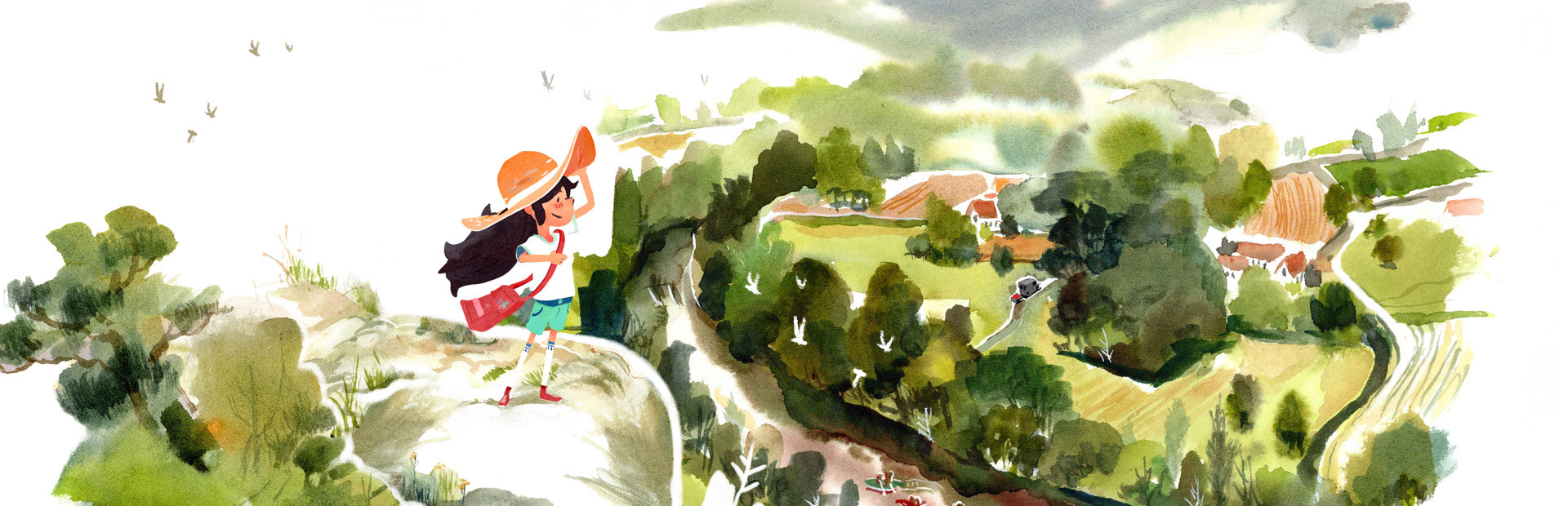
Dordogne is a game I would only recommend to diehard point-and-click adventure games, and even then, barely. While it's an artistical masterpiece, it is a chore to play. It does very little, and the little it does is subpar.
To justify that, I want to discuss three aspects of the game I think carry the most weight: narrative, presentation and gameplay.
Starting with presentation. The game is, undoubtedly, an artistic achievement. It looks and sounds great, and there's no mistaking the artistry behind the people who developed it. Each scene and location are hand painted in watercolor, and while the level of detail varies a lot, it is always recognizable and evocative. Character models are highly-stylized and just coherent, I love the way their eyes and mouths kind of 'fly' on their face, which is a beautiful effect and entirely intentional. Even the small touches such as the sticker designs are fabulous. The music is nothing I'll be listening after beating the game, but it's quite evocative and helps to envelop you in the environment you're in. Voice acting is not present in every interaction, but where it is, it's really competent and helps to drive home the moments being portrayed, although I believe the game would have benefited immensely from a default French narration from end to end. And here is kind of where I stop with the compliments, because I move onto the next aspect: narrative.
Narrative-wise, the game starts with a strong premise, but keeps tripping over itself as the game proceeds. I think I lost interest around the halfway mark, when the story between Mimi and its dad became very caricate and heavy-handed, and a new (important) character is introduced with very little backstory, explanation or foresighting, just to become the emotional crux of the whole plot. It is obvious what the game wants you to feel, but in between too much exposition, too little gameplay and a heavy-handedness in the narrative style, you never really feel it for yourself. So when the game wants you to care about a certain scenario, you just don't. And by the end, the game takes a narrative tailspin in a very short time, leaving you disoriented and unsatisfied with the resolution it presents. It feels like the artists behind the game spent 80% of their time painting all locations, only to remember they needed a narrative and decided to spend 10% of their time on it, with gameplay getting the final 10%. Which probably tells you already what I think of it …
Gameplay, as should be no surprise to anyone at this point, is not something I enjoyed. It's a point-and-click adventure game, so I know the pace will be slower than what I tend to like, but surprisingly a decision was made to untie movement from p&c towards traditional 3D navigation. But, your character move slowly, which is not a massive deal when you're in a small house, but starts to get annoying once you move to open areas such as the garden and forest. The game has this constant habit of forcing you to stop whatever you are doing to do mini-environmental-puzzles such as brushing your teeth or pouring milk on your cereal or browsing for a scarf on a closet, and while those interactions are supposed to be tactile, they are just clunky, unfun and kill the pace. Think of games like Venba or Assemble With Care where you need to perform those manual things with your controller, just that here not a single one of those interactions is fun or work well. Once the pace has been killed and you've been taken away again from the game to these mini-puzzles, there's no coming back. Besides that, the game hides several collectables throughout each level in the forms of tapes, stickers, words and sounds, and while the tapes are visible on the world, all other collectables are only 'visible' and 'interactable' once you're near them. So if you're looking to 100% the game, or even engage a bit further with the narrative, be prepared to stop whatever you're doing, figure out where the game wants you to go for progression purposes, avoid it like the plague, and sweep each square pixel of the map for hidden collectables before doing so. By the third chapter I was already sick of doing that, and even by doing that I was able to miss collectables God knows where, which frustrated me and convinced me that abandoning this altogether was the happy path for me, at which point at least the pacing helped me to know what was going on. It's just a collection of poor decisions and implementation choices that defeat any chance the game had of being fun.
Should you play it? If you're not a point-and-click enthusiast, I would stay away from it. Life is short and there are too many games out there that are more fun than this one. Even if you love point-and-click games, there are many other better ones for you to tackle before buying this. Buyer beware
Nov 16 2026

When I first got to this game in my backlog, it wouldn’t run unless I updated my graphics card, which I didn’t have enough space to do at the time. When I finally updated it, I was in the middle of the game in my last post, after which I got stalled even further trying to make that mod, but now that that’s done, I finally got around to beating this game:
-
Danger Cliff 2

12 hours playtime
no achievements
2D Collectathon platformer. Same controls as the first game, but now you have two additional characters to play as and can switch between them at fast travel points. The only difference between them and the returning playable character is their special (B button) ability: one does a rocket-boost upward, and the other becomes temporarily invincible for a second or two.
In my post about the game’s demo that no one read, I mentioned that it fixed nearly every problem I had with the original while maintaining the same quality level design that the original had. While I stand by this to an extent, it’s also clear that some of the first game’s problems do persist in this sequel. Some zones have background objects that look solid, some zones have solid objects that look like they’re in the background, and the Midnight Dreadnought has you run towards projectiles that are shot towards you–except instead of bullets, they’re lasers that you might mistake for a harmless speed-line effect, making it arguably worse.
Even the unnecessary tedium from lack of checkpoints returns, albeit only in the otherwise-short postgame (and one part of Richard’s Tower), but having the lack-of-checkpoints issue be in these difficult late-game/postgame segments makes it as severe as the issue can be, because failing on the second half means you have to slog through the first half that you’ve already mastered again and again just for another chance. The three special challenges only needed one checkpoint each at their halfway points, and Lunar Launchbase only needed two checkpoints (each one being at the two character-changing blocks), and the postgame would’ve been SO much more enjoyable, but no. Honestly, the only reason I didn’t give up on the postgame is because I modded the fast travel stations’ locations to give myself the checkpoints that the game should’ve had to begin with, and do you want to know what your reward is for making it past the return of tedious checkpoint absences? The return of the boring, bloated boss! Yes, the first game had its boring, bloated boss as the first one, and this game has it as the last one; it’s poetic. The only thing the dev did to pretend to make it hard is that all of its attacks kill you in one hit, but all of said attacks are very easy to avoid (I even beat the boss unmodded); you just have to do it six tedious phases in a row.
So yeah, if you’re okay with stopping after the regular final boss and not doing any of the post-game stuff, I can kinda recommend the game despite its issues since it’s free. However, I very much do NOT recommend going through the post-game.
Nov 12 2026
When I first played this game after reaching it in my backlog, I decided to postpone it shortly afterward because it was of such high quality, I wanted to save it for when I had played a lot of bad games in a row. When I finally went back and beat it, I decided to put together a small mod for it before posting about it here because I thought the mod would only take a couple weeks to make. It ended up taking over five months, but it’s finally done now, so now it’s finally time for me to post about one of my favorite games I played this year:
Despite the title, there’s no detective-style Adventure gameplay; this is a straightforward, linear platformer in the same vein as the Super Mario games. There are even blocks you can jump at from below to get coins–or you can jump on top of them to do the same, with the coins even popping out in the other direction, which is kinda funny. There are nine worlds, each with eight levels and a boss, and each level has three paintings you can collect. Like your typical collectathon, you’ll need enough paintings to unlock later worlds, but unlike most collectathons, almost every level in this game is strictly linear, with the paintings’ sprites indicating if it’s the 1st, 2nd, or 3rd so you’ll know if you missed one and can go back for it.
You can even get a variety of power-ups that you use by pushing the run button, though many of these take inspiration from other popular franchises, such as a whip or an arm cannon that you can charge by holding the run button. There are so many different power-ups, in fact, that a few of them rarely ever show up and feel like they weren’t designed to work in most of the levels, but that’s a fairly minor problem since 1) most power-ups DO work with the levels and 2) your previous power-up goes into your reserve slot when you get a new one, so if you accidentally get one you don’t want to use, you can just switch back.
The game also has a bunch of different characters you can play as, each of which has a unique ability (on top of whatever power-up you might have). On top of this, the eight main worlds each have a key you can find, and for every two keys you collect, you can unlock an additional playable character, each with their own special ability (though the game never tells you that none of the unlockable characters can use power-ups), and if you miss a key, there are NPCs in the hub that give you hints on where to find them so you don’t have to blindly replay each level to find them. That said, just like the power-ups, character abilities can range from “very useful” to “doesn’t really work with this game.” For example, one character lets you run through enemies without taking damage, which sounds useful, but then you’ll discover that the vast majority of levels have just enough verticality that you can’t really make use of this power, as you’ll hit a wall or a mandatory drop-down right when the power starts to activate.
However, both of those aren’t huge issues because every character can beat every level and get every painting and key; you’re never forced to use a power that doesn’t work with the level. The first painting in Load-Bearing Grid might look like it can only be reached by the double-jump character, but it turns out the dev was just really bad at introducing the fact that the game has invisible blocks, which are used to get exactly two paintings in the game and never used again (so there’s the game’s first mark against it). Still, even when a painting or key does requires a power-up to obtain, said power-up is always in the level itself, so you never need clairvoyance or a second playthrough to get 100%. There used to be a couple that didn’t, but the dev is very responsive and put out an update to address them after I left some comments about them (but he didn’t replace the invisible blocks, though). Sure, the game has an inventory system where extra power-ups you collect are sent to a storage you can withdraw from, but you can only use it on the world map, and the levels don’t really give you any clues as to what power-ups would be good to bring into them, so it doesn’t address the “you’d have to play the level twice to get the collectible” issue, which means the inventory ends up being one more thing that you’ll rarely end up using. Still, when the worst thing that can be said about a game is “some mechanics don’t add anything and might as well be ignored,” that speaks to the quality of everything else.
Well, there is one bigger issue: the game has a lot of drop-offs that go below the camera, and the game never explains that you can hold up or down to pan the camera, so I just thought the game had a lot of blind jumps at first. Most of the game is good about not doing this, but then you’ve got levels like Monument Valley where you have to jump across pillars that place the ground just barely below the bottom of the screen, so you won’t know if there’s safe ground or instakill quicksand there until you stop and pan the camera down. The drawbridge level in Caldera Keep is especially bad about doing this, what with it being a mostly vertical level where you travel downwards and have to avoid falling into the occasional lava pit.
As for why this issue is so prevalent? Turns out, most of the levels in this game are literally 1:1 copies from its now-delisted prequel, which had a more zoomed-out camera that shows more of the level at once. The tileset and backgrounds might have been switched out, and there might be a minor tweak to the level design every few stages, but really, if you’ve played one game, you’ve played both. The only meaningful difference is that the first game has a completely different set of bosses, as that game switches to a bullet hell for boss fights while the second game stays a platformer throughout. There are also a small handful of levels that are exclusive to each version, such as the first game having a level that actually introduces the invisible blocks in a somewhat-intuitive way, or how the second game’s final world is made up of all-new levels. I looked up an archive of the first game because I enjoyed the second game so much, but man, my disappointment grew as I realized it was quite literally just a less polished version of its “sequel.” This also explains the second game’s issue with certain power-ups and character abilities: they were quite literally afterthoughts shoehorned into a game that was never designed to accomodate them.
Oh, and speaking of the final world, I wasn’t a huge fan of it, either. The gimmick there is that it has a lot of black enemies in front of dark backgrounds–often with an additional darkness effect surrounding you, so you won’t see the enemies until you get close and thus barely have any time to react to them (if at all).
Still, even with those issues, I can recommend the game for its consistent quality with everything else and for having quite a lot of well-made levels for only $5. You can buy it here: https://yaru.itch.io/daemon-detective-gaiden-2 and I’m not just saying that because my mod is giving me a conflict of interest; I’d have recommended it even without the mod. Heck, you may already have the game since it went free back in 2020, so you might not even need to buy it to play it. Really, the only situation where I wouldn’t recommend it is if you’ve beaten the first game, because again, that means you’ve basically beaten the second game already.
Nov 10 2026

#454
#64 of 2026
November 10, 2026

-
Unrailed 2: Back on Track

44 hours playtime
60 of 60 achievements
Report #437: Unrailed 2: Back on Track
What a nice coop game. Just like the first installment this has caused a lot of laughing, screaming and face palm moments in our four-seat gaming evenings.
I do not think this is meant to play solo, although it is possible, but its best played with a couple of friends.
Gameplay is simple, get some stone, wood and craft train tracks. Reach the next station without crashing your train. There are some nice new features compared to the first game, like special wagons that give you hexnuts to unlock customizations. Or a wagon that prints another wagon.
Nov 08 2026

#453
#63 of 2026
November 8, 2026